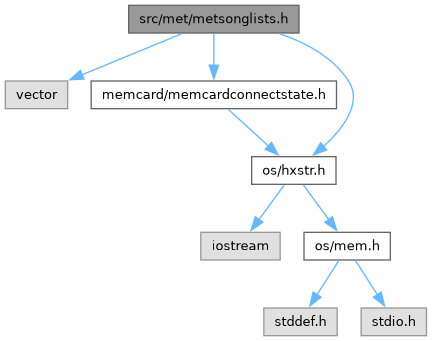
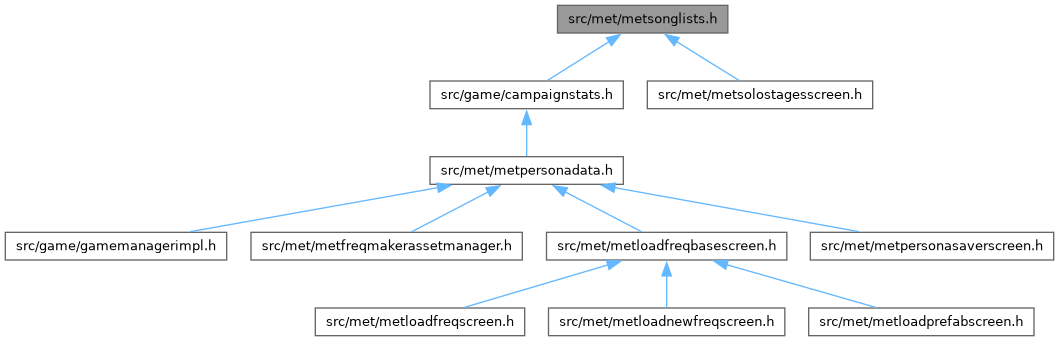
Go to the source code of this file.
Classes | |
| struct | StageListEntry |
| One level in a stage's list. More... | |
| struct | ArenaListEntry |
| One arena in the solo or the local arena table. More... | |
Functions | |
| bool | operator< (const StageListEntry &left, const StageListEntry &right) |
| Order two stage entries by mOrder. | |
| bool | operator< (const ArenaListEntry &left, const ArenaListEntry &right) |
| Order two arena entries by mOrder. | |
| HxStr | DifficultyName (int nDifficulty) |
| Report the display name of a difficulty. | |
| void | RebuildStageLists () |
| Rebuild the per-stage level lists from the configuration. | |
| void | RebuildArenaLists () |
| Rebuild the solo and local arena tables from the configuration. | |
| std::vector< HxStr > & | GetLevelNames () |
| Report the level names RebuildStageLists() last read. | |
| std::vector< StageListEntry > * | GetStageList (int nStage) |
| Report one stage's level list. | |
| std::vector< ArenaListEntry > * | GetArenaList () |
| Report the arena table for the current game mode. | |
| MemcardConnectState | NextCardSlot (const MemcardConnectState &slot) |
| Report the memory-card location that follows another. | |
| HxStr | FirstCardSlotName () |
| Report the name of the first memory-card location found, or 1 when there is none. | |
Function Documentation
◆ operator<() [1/2]
|
inline |
Order two stage entries by mOrder.
Inline. The sort routines at 0x003cec08 and 0x003ced70 compare the two words at +0x08 with slt and call nothing.
- Parameters
-
left The first entry. right The second entry.
- Returns
- Whether the first entry sorts first.
◆ operator<() [2/2]
|
inline |
Order two arena entries by mOrder.
Inline, for the same reason as the StageListEntry overload.
- Parameters
-
left The first entry. right The second entry.
- Returns
- Whether the first entry sorts first.
◆ DifficultyName()
| HxStr DifficultyName | ( | int | nDifficulty | ) |
Report the display name of a difficulty.
The routine reads configuration code 0x258 with the key ms_easy, ms_normal, or ms_expert for difficulties 0, 1, and 2, and reports an empty string for any other value. The front end's stage and statistics screens call it. Every routine in this unit is a free function over file-scope data, and the unit's name is inferred. The European release looks the three names up in the current language instead.
- Parameters
-
nDifficulty The difficulty.
- Returns
- The name.
- Ghidra address:
- NTSC-U/C: 0x003cc498
- Ghidra address:
- PAL: 0x00403d48
◆ RebuildStageLists()
| void RebuildStageLists | ( | ) |
Rebuild the per-stage level lists from the configuration.
The routine reads the level names under configuration code 0x276 into GetLevelNames(), empties every stage list, appends each level to the list of the stage configuration code 0x25d reports for it, and sorts each list by mOrder. The MetRenderer and MetNullRenderer constructors and MetExpansionPakScreen call it.
- Ghidra address:
- NTSC-U/C: 0x003cc7a0
- Ghidra address:
- PAL: 0x004040a8
◆ RebuildArenaLists()
| void RebuildArenaLists | ( | ) |
Rebuild the solo and local arena tables from the configuration.
The routine reads the names under configuration code 0x27a for solo and then for local, rebuilds each table with mOrder from configuration code 0x25f, and sorts both. The MetRenderer constructor and MetExpansionPakScreen call it.
- Ghidra address:
- NTSC-U/C: 0x003ccab0
- Ghidra address:
- PAL: 0x004043e8
◆ GetLevelNames()
| std::vector< HxStr > & GetLevelNames | ( | ) |
Report the level names RebuildStageLists() last read.
The list is a function-local static of a file-local routine, which this accessor forwards to. CampaignStats rebuilds and merges its level records from it.
- Returns
- The names.
- Ghidra address:
- NTSC-U/C: 0x003d06b8
- Ghidra address:
- PAL: 0x00408478
◆ GetStageList()
| std::vector< StageListEntry > * GetStageList | ( | int | nStage | ) |
Report one stage's level list.
- Parameters
-
nStage The stage, counted from 1.
- Returns
- The list.
- Ghidra address:
- NTSC-U/C: 0x003d06d8
- Ghidra address:
- PAL: 0x00408498
◆ GetArenaList()
| std::vector< ArenaListEntry > * GetArenaList | ( | ) |
Report the arena table for the current game mode.
The local table in kGameModeLocal and the solo table otherwise. MetArenasScreen, the tutorial, the solo-stages, and the remix-load screens read it.
- Returns
- The table.
- Ghidra address:
- NTSC-U/C: 0x003d06f8
- Ghidra address:
- PAL: 0x004084b8
◆ NextCardSlot()
| MemcardConnectState NextCardSlot | ( | const MemcardConnectState & | slot | ) |
Report the memory-card location that follows another.
Port 1 without a multitap is followed by port 2, port 2 by port 1, slot 1-A by slot 1-B, and slot 1-B by slot 1-A. Any other location gives the default MemcardConnectState. The memory-card screens call it to cycle the selected card.
- Parameters
-
slot The current location.
- Returns
- The next location.
- Ghidra address:
- NTSC-U/C: 0x003d0a40
- Ghidra address:
- PAL: 0x00408818
◆ FirstCardSlotName()
| HxStr FirstCardSlotName | ( | ) |
Report the name of the first memory-card location found, or 1 when there is none.
The body reads GlobalSettings::mCardSlots and copies the slot name of its first entry. The front end's character, remix, and Freq-maker screens call it. The European release copies the name only when the first entry is the first slot of port 1, and reports 1 otherwise.
- Returns
- The name.
- Ghidra address:
- NTSC-U/C: 0x003d0b98
- Ghidra address:
- PAL: 0x00408990