The chart-editor data model. More...
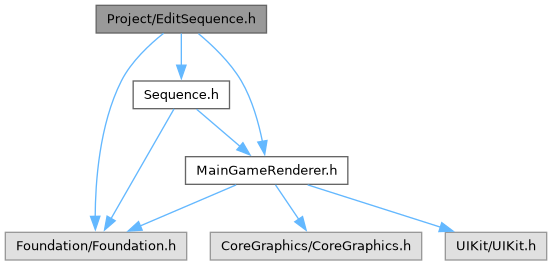
Go to the source code of this file.
Classes | |
| class | EditSequence |
| The chart-editor data model. More... | |
Enumerations | |
| enum | { kEditSequencePanelCount = 16 } |
| The playfield panel count. More... | |
| enum | { kEditSequenceTemplateSlotCount = 4 } |
| The template slot count. More... | |
| enum | { kEditSequenceMusicBarSegmentCount = 120 } |
| The music-bar segment count. More... | |
| enum | { kEditSequenceMusicBarByteCount = 60 } |
| The packed music-bar and conflict-bar bitmap length. More... | |
| enum | { kEditSequenceTemplateMusicBarByteCount = 120 } |
| The per-template raw music-bar buffer length. More... | |
Detailed Description
The chart-editor data model.
Reconstructed from Ghidra program Jubeat (class EditSequence, image base 0x100000000). All
- Ghidra address:
- values are offsets relative to that image base.
The superclass is NSObject , taken from the [NSObject init] chain-up in -initWithData:sequenceData: at 0x21725c. An EditSequence is the editor sibling of the play-time Sequence : it holds the edit events, four template slots (an empty structural template plus the basic, advanced, and extreme difficulty templates loaded from a downloaded pack), a music-bar note-density table and a conflict table, an undo/redo history, and note add/delete plus area copy/paste/delete operations. It mirrors the play engine's beat (haku) and measure phase trackers, its marker state, and its per-panel judgement ring so the edit renderer can share the same drawing code.
The class carries no embedded __FILE__ path and no C++ RTTI, so the file basename is the runtime class name and this file lives at the Project/ root, beside Sequence . The note event record is the same 20-byte SequenceEvent that Sequence defines, so this class reuses it rather than redeclaring a parallel type.
Enumeration Type Documentation
◆ anonymous enum
| anonymous enum |
◆ anonymous enum
| anonymous enum |
◆ anonymous enum
| anonymous enum |
◆ anonymous enum
| anonymous enum |